Esporte
How Digital Media Is Changing the Way Sports Fans in Amazonas Follow Global Competitions


Sports Culture in Amazonas Continues to Grow
Sports have always been an important part of everyday life in Amazonas. Football remains the most popular choice for many fans, but interest in volleyball, basketball, combat sports, motorsports, baseball, and international competitions has also expanded. People follow local teams, national championships, major South American tournaments, and sporting events held in other parts of the world.
This growing interest is closely connected to the development of digital media. In the past, supporters mainly depended on television schedules, radio programs, printed newspapers, and conversations with friends to learn when a match would take place. Today, sports information is available through websites, mobile applications, social networks, messaging groups, and official league platforms.
The result is a more connected sports culture. Fans in Amazonas can support regional athletes while also following clubs and competitions located thousands of kilometers away. Geographic distance is no longer the same barrier it once was.
International Competitions Are More Accessible
Digital access has made it easier for people in Amazonas to discover competitions that may receive limited coverage on traditional Brazilian television. European football, Asian baseball, North American basketball, international volleyball, combat sports, and major global tournaments can now attract audiences from many different regions.

Vote Na Gente no iBest - No Amazonas é Assim
Fans do not only look for final results. They also want to know when games begin, which teams are playing, where tournaments are being held, and how the competition is organized. Before an important event, many people search for fixture information and compare schedules with their own daily routines.
This behavior has created a wider interest in global sports culture. A supporter may follow a local club on one day and an international tournament on the next. Digital media allows both interests to exist together without reducing the importance of regional sport.
Why Accurate Sports Schedules Are Important
One of the biggest difficulties in following international competitions is the time difference between countries. A football match played in Europe may begin in the afternoon there but take place at a very different time in Brazil. Events held in Asia can start early in the morning or late at night for Brazilian audiences.
For this reason, checking the schedule in advance has become an important habit. Many fans review the day’s events before work, school, or other activities. Online resources such as visitorstv can help users examine available sporting events and organize their plans around the competitions that interest them.
Vote Na Gente no iBest - No Amazonas é Assim
An organized schedule is particularly useful on busy days. Several football matches, baseball games, basketball fixtures, and other events may take place at similar times. Without checking the timetable first, fans can easily miss the beginning of a match or confuse the time zone used by an international source.
Users should always confirm whether a listed time refers to local Brazilian time or the time zone of the country hosting the event. This small detail can make a major difference when planning to follow a competition.
Mobile Devices Have Changed Sports Consumption
Smartphones have become one of the main tools used by sports fans. A person no longer needs to remain in front of a television or desktop computer to check a result, read a report, or confirm the starting time of a game.
Mobile devices allow fans to access information while traveling, working, studying, or spending time away from home. Notifications can provide updates about goals, final scores, postponements, schedule changes, and other important developments.
Vote Na Gente no iBest - No Amazonas é Assim
This flexibility is especially useful in Amazonas, where distances can be significant and daily routines may involve long periods of transportation. Mobile access allows sports supporters to remain informed without interrupting their responsibilities.
However, constant notifications can also become distracting. Fans may benefit from choosing only the teams and competitions they genuinely want to follow. A more selective approach makes it easier to receive useful information without being overwhelmed by unnecessary alerts.
Social Media Creates New Sports Communities
Social networks have made following sports a more interactive experience. Fans can discuss matches in real time, share opinions, watch short clips, respond to official announcements, and communicate with supporters from other countries.
Clubs, athletes, journalists, leagues, and sports organizations use social media to communicate directly with the public. This gives fans faster access to official news, although it is still important to confirm whether an account is authentic and verified.
Vote Na Gente no iBest - No Amazonas é Assim
Messaging groups also play an important role. Friends and supporters often create communities dedicated to particular clubs, leagues, or sports. These groups exchange information about upcoming fixtures, results, team news, and major moments from competitions.
For audiences in Amazonas, these online communities connect local sports culture with a much larger international environment. A supporter can celebrate a regional achievement while also taking part in a global discussion about a major tournament.
Local Sports Remain Essential
The growing popularity of international competitions does not reduce the value of local sport. Regional clubs, community tournaments, youth academies, school programs, and individual athletes continue to be essential to the sporting identity of Amazonas.
Local events provide opportunities for young people to participate, develop skills, and build healthier routines. They also create economic activity for coaches, organizers, small businesses, event workers, and local media professionals.
Vote Na Gente no iBest - No Amazonas é Assim
International exposure can even support regional development. Fans who observe successful competitions abroad may become more interested in training methods, event organization, athlete preparation, venue management, and sports technology.
The strongest sports culture is therefore not limited to either local or international events. It brings both together. People can remain proud of regional athletes while learning from competitions taking place elsewhere.
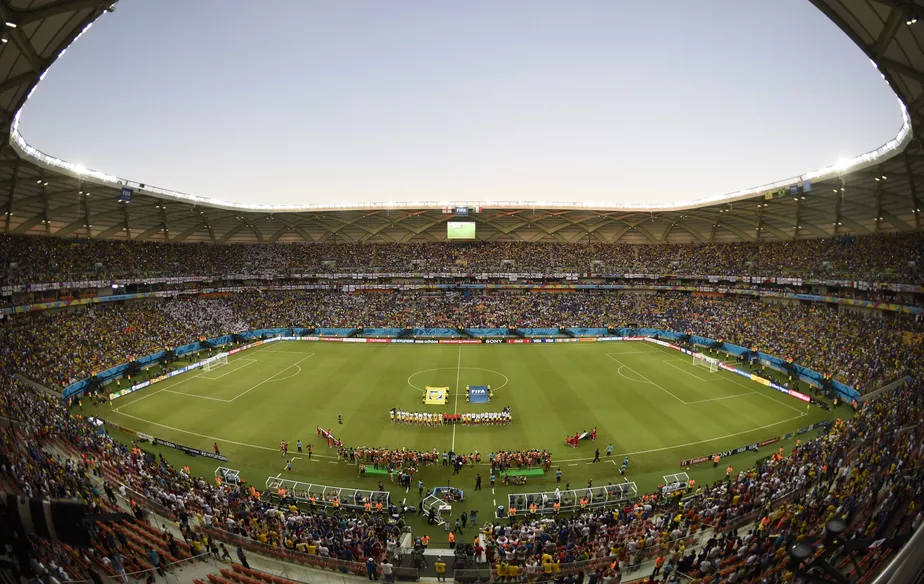
Inglaterra x Itália na Arena da Amazônia durante a Copa do Mundo 2014 / Foto : AFP
The Importance of Reliable Information
The large amount of sports content online also creates challenges. False reports about injuries, transfers, team selections, suspensions, and match cancellations can spread quickly. Sometimes an old article is shared again and presented as if it described a current event.
Fans should check the date of publication and compare important claims with official club websites, league announcements, recognized sports media, and verified social accounts. Relying on a single unofficial post can lead to confusion.
Schedules should also be checked carefully. A tournament may change its timetable because of weather, transportation difficulties, venue problems, broadcasting decisions, or other unexpected circumstances. The most recent official information should always receive priority.
Vote Na Gente no iBest - No Amazonas é Assim
Readers should also distinguish between confirmed facts and personal predictions. An opinion about which team may win is not the same as an official lineup, injury report, or tournament announcement.
Digital Media Can Introduce Fans to New Sports
One benefit of online sports coverage is the opportunity to discover competitions outside a person’s usual interests. Someone who mainly follows football may begin watching basketball, volleyball, baseball, motorsports, or combat sports after seeing a schedule, highlight, or athlete interview online.
This wider exposure can help smaller sports find new audiences. It can also encourage young people to try different physical activities rather than limiting themselves to the most popular option.
Sports documentaries, historical articles, interviews, and educational videos add further context. They allow fans to understand the traditions, rules, and personalities behind a competition instead of focusing only on final scores.
Vote Na Gente no iBest - No Amazonas é Assim
A More Personalized Sports Experience
Modern sports consumption is increasingly personalized. Fans choose which clubs to follow, which notifications to receive, which competitions to prioritize, and how much time they want to spend reading or watching sports content.
Some supporters prefer complete matches, while others follow short updates because of work or family responsibilities. Some enjoy statistics and tactical analysis, while others are more interested in athlete stories, local culture, and community participation.
Digital platforms make these different experiences possible. They provide multiple ways to remain connected, whether through schedules, news reports, live updates, social discussions, or post-match analysis.
The Future of Sports Access in Amazonas
As internet access and mobile technology continue to improve, sports information will likely become even more accessible throughout Amazonas. Faster connections can support richer media, quicker updates, and more opportunities for regional athletes and organizations to reach new audiences.
Vote Na Gente no iBest - No Amazonas é Assim
Local media outlets can also benefit by combining regional reporting with broader sports coverage. Stories about community tournaments, promising athletes, and historical sporting moments can exist alongside information about major international events.
This balance can strengthen regional identity while keeping audiences connected to the rest of the world. Technology does not need to replace local traditions. Instead, it can help preserve and share them with a larger public.
Conclusion
Digital media has changed how sports fans in Amazonas discover competitions, check schedules, receive updates, and communicate with other supporters. It has created greater access to international events while allowing regional sports to remain an important part of local identity.
The modern sports experience is no longer limited to watching a match from beginning to end. It includes planning around schedules, reading reliable news, participating in online communities, learning about new competitions, and supporting athletes at both local and international levels.
Vote Na Gente no iBest - No Amazonas é Assim
By using trustworthy information sources and checking dates, schedules, and time zones carefully, fans can enjoy a more organized and informed sports experience. As technology continues to develop, the connection between Amazonas and the global sports community will likely become even stronger.